Friday, September 7, 2018

North American Festival of Wales

This past weekend I had the privilege to speak on pilgrimage places in Wales at the North American Festival of Wales. Wales has a rich history as a place of pilgrimage, long before the first Christians ever arrived or were formed in the country.Holy wells, lakes, trees, islands, and standing stones were sacred sites visited for prayer and ritual in the Iron Age and likely before.

Some of these sites have been remembered as they were woven into the Christian story, like Virtuous Well aka St. Anne's well near Trellech.  Others were lost to history and rediscovered through chance, such as Llyn Cerrig Bach on Anglesey Island. Most have probably been lost to us for good.

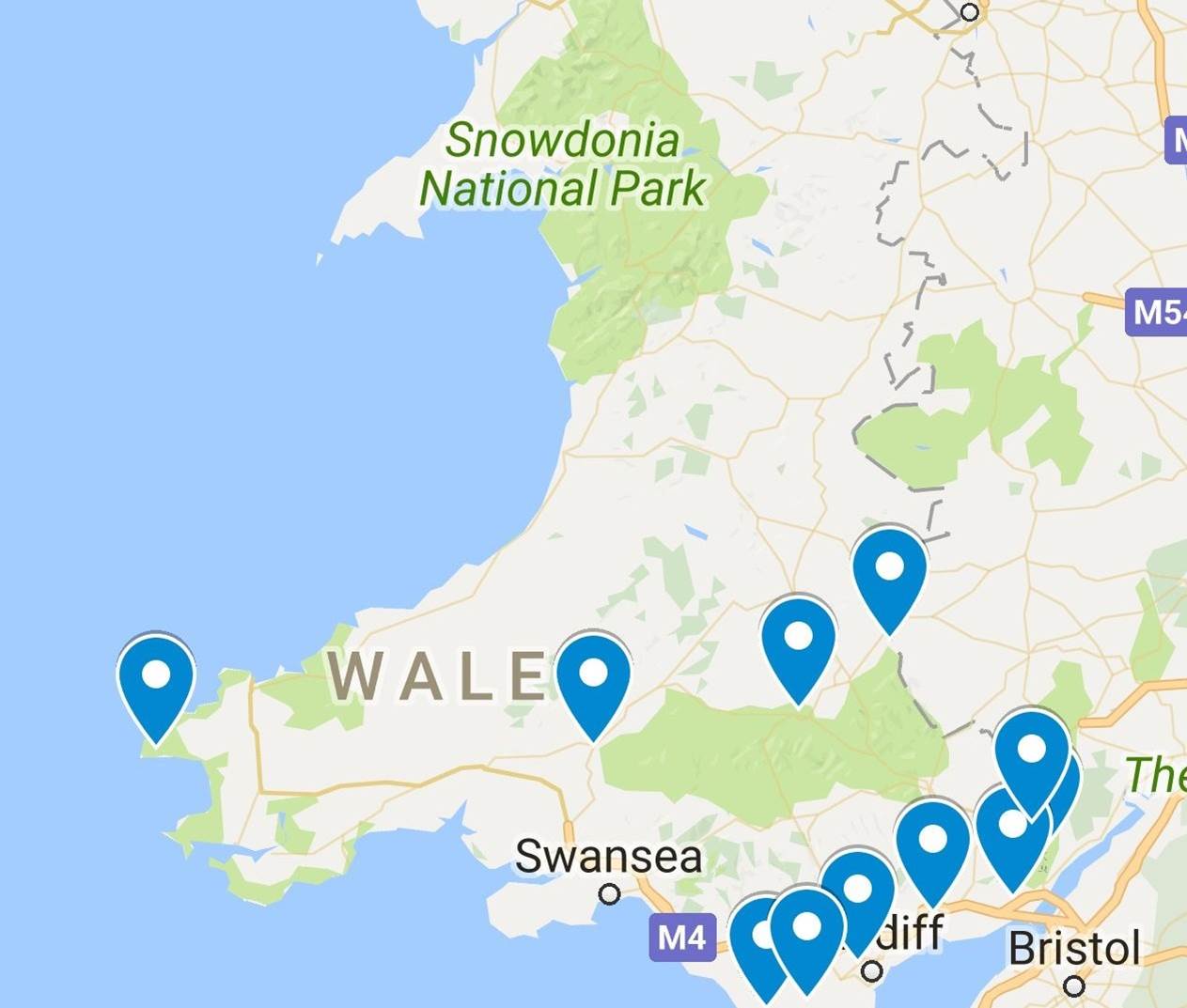
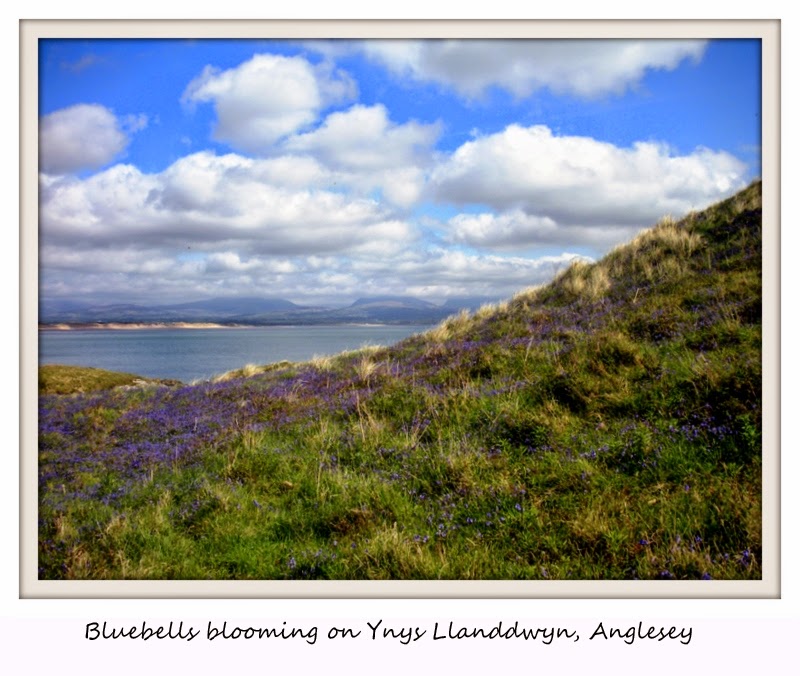
Likewise, there were probably more established pilgrimage routes leading to places such as Bardsey Island and St. David's Cathedral than are remembered.  In 2013, pilgrims from Washington National Cathedral heard about the reclaiming of the North Wales Pilgrim's Way from some of the organizers of that project during the diocese of St. Asaph's "Year of the Pilgrimage" and then went on to visit some of the stops along that route. In my talks on Friday and Saturday, we traced that northern route from Basingerwerk Abbey to Bardsey Island as well as a pilgrimage trail in the south that leads from the Wye Valley along the coast to St. David's Cathedral. Below are a few maps and pictures of some of those sacred sites we virtually visited this weekend. Thank you to all who attended!


North Wales Pilgrim's Way

Basingwerk Abbey

St. Winefride's Well, Holywell


St. Beuno's Church, Clynnog Fawr


South Wales pilgrimage route

Clooties on a hawthorn tree by Virtuous Well


Tintern Abbey
Old Celtic crosses, St. Illtyd's Church


St. David's Cathedral

Saturday, March 17, 2018

This Week on the Celtic Calendar - St. Patrick and the Tradition of the Lorica


Today is St. Patrick's Day and while some may be celebrating bedecked in shamrocks with a green beer in hand, for me this is the start of the season where I turn to St. Patrick's Lorica as my morning meditation. 

A lorica, from the Latin word for body armor, is a prayer or blessing for protection.  Often said in the morning or before the start of a journey, a lorica wasn’t recited as much to invoke the Spirit, which is always present, rather to remind the one praying of the presence of the Holy that is always with us.  When these types of prayers were said  it was customary for those praying to stand and draw a circle around themselves with their index finger to symbolize the encompassing power of protection they were  invoking.

The hymn, “Be Thou My Vision,” is based on an old Irish lorica, and has been translated into these words of song:

Be thou my vision, O Lord of my heart,
Be all else naught to me, save that thou art;
Thou my best thought in the day and the night,
Both waking and sleeping, thy presence my light.
Be thou my wisdom, be thou my true word,
Be thou ever with me, and I with thee Lord;
Be thou my great Father, and I thy true son;
Be thou in me dwelling, and I with thee one.
Be thou my breastplate, my sword for the fight;
Be thou my whole armor, be thou my true might;
Be thou my soul's shelter, be thou my strong tower:
O raise thou me heavenward, great Power of my power.
Riches I heed not, nor man's empty praise:
Be thou mine inheritance now and always;
Be thou and thou only the first in my heart;
O Sovereign of Heaven, my treasure thou art.
High King of Heaven, thou Heaven's bright sun,
O grant me its joys after victory is won!;
Great heart of my own heart, whatever befall,
Still be my vision, O Ruler of all.

While some loricae are simple invocations, others, such as the Lorica of St. Fursey and the Breastplate of Laidcenn, go through an inventory of the body, asking for protection from head to toe, inside and out.

The Lorica of St. Fursey
The arms of God be around my shoulders
The touch of the Holy Spirit upon my head,
The sign of Christ’s cross upon my forehead,
The sound of the Holy Spirit in my ears,
The fragrance of the Holy Spirit in my nostrils,
The vision of heaven’s company in my eyes,
The conversation of heaven’s company on my lips,
The work of God’s church in my hands,
The service of God and the neighbour in my feet,
A home for God in my heart,
And to God, the Father of all, my entire being.

The Breastplate of Laidcenn
O God, defend me everywhere
With your impregnable power and protection.
Deliver all my mortal limbs,
Guarding each with your protective shield,
So the foul demons shall not hurl their darts
Into my side, as is their wont.

Deliver my skull, hair-covered head, and eyes,
Mouth, tongue, teeth, and nostrils,
Neck, breast, side, and limbs,
Joints, fat, and two hands.

Be a helmet of safety to my head,
To my crown covered with hair,
To my forehead, eyes, and triform brain,
To snout, lip, face, and temple.

To my chin, beard, eyebrows, ears,
Chaps, cheeks, septum, nostrils,
Pupils, irises, eyelids, and the like,
To gums, breath, jaws, gullet.

Protect my spine and ribs and their joints,
Back, ridge, and sinews with their bones;
Protect my skin and blood with kidneys,
The area of the buttocks, nates with thighs.
Protect my hams, calves, femurs,
Houghs and knees with knee-joints;
Protect my ankles and shins and heels,
Shanks, feet with their soles.

Protect my toes growing together,
With the tips of the toes and twice five nails;
Protect my breast, collarbone and small breast,
Nipples, stomach, and navel.

Protect the whole of me with my five senses,
Together with the ten created orifices,
So that from soles of feet to crown of head
I shall not sicken in any organ inside or out.


The most well-known lorica today is the Breastplate of Saint Patrick, or The Deer’s Cry. While most
likely written by someone other than Patrick (calling on the strength of Heaven as demonstrated in the natural world  probably would have smacked a little too much of the pre-Christian druidic and bardic prayers for Paddy to be comfortable with), it serves as a good compass to point us back to the spiritual legacy of the saint.

THE CRY OF THE DEER  (Fáed Fíada  - St. Patrick)
I arise today through a mighty strength,                              
the invocation of the  Trinity,                                      
through belief in the Threeness,                                
through confession of the Oneness                                           
of the Creator of creation.

I arise today through the strength of Christ with His Baptism,
through the strength of His Crucifixion with His Burial
through the strength of His Resurrection with His Ascension,
through the strength of His descent for the Judgment of Doom.

I arise today through the strength of the love of Cherubim
in obedience of Angels, in the service of the Archangels,
in hope of resurrection to meet with reward,
in prayers of Patriarchs, in predictions of Prophets,
in preachings of Apostles, in faiths of Confessors,
in innocence of Holy Virgins, in deeds of righteous men.

I arise today, through the strength of Heaven:
light of Sun, brilliance of Moon, splendor of Fire,
speed of Lightning, swiftness of Wind,                            
depth of Sea, stability of Earth,                                  
firmness of Rock.

I arise today, through God's strength to pilot me:
God's might to uphold me,                                                   
God's wisdom to guide me,
God's eye to look before me,                                               
God's ear to hear me,
God's word to speak for me,                                                    
God's hand to guard me,
God's way to lie before me,                                           
God's shield to protect me,
God's host to secure me:
against snares of devils,                                                             
 against temptations of vices,
against inclinations of nature,                                                           
against everyone who shall wish me ill,                                                     
afar and anear, alone and in a crowd.
I summon today all these powers between me (and these evils):
against every cruel and merciless power that may oppose my body and my soul,
against incantations of false prophets,
against black laws of heathenry,
against false laws of heretics, against craft of idolatry,
against spells of witches and smiths and wizards,
against every knowledge that endangers man's body and soul.

Christ to protect me today
against poison, against burning, against drowning,
against wounding, so that there may come abundance of reward.

Christ with me, Christ before me,                                     
Christ behind me, Christ in me,                                          
Christ beneath me, Christ above me,                                    
Christ on my right,  Christ on my left,                                  
Christ in breadth, Christ in length,  Christ in height,
Christ in the heart of every one who thinks of me, 
Christ in the mouth of every one who speaks of me,
Christ in every eye that sees me,                                     
Christ in every ear that hears me.

I arise today through a mighty strength,                                 
the invocation of the Trinity,                                            
through belief in the Threeness,                                   
through confession of the Oneness                                        
of the Creator of creation.


To read more about Patrick, in his own words, his Confession can be read here.

Wednesday, February 17, 2016

Imbolc and the Feast of St. Brigid

When I went to bed late Monday night, the half moon shone  dimly on a blanket of snow. I woke up the following morning to the sound of freezing rain bouncing off ice covered trees. By the time I left for the Cathedral, the last traces of snow and ice were melting in the margins of sidewalks and muddy yards, washed by a steady rain. As I parked my car and walked to the building where I had my first meeting, the sun shone warm on my back as robins, cardinals and blue jays congregated in the grass for a late lunch. 

Welcome to Imbolc, the season of change and transformation-- sometimes all in the course of one day.

Since we were still recovering from our first big snow of the year when February 1 rolled around, I've delayed posting about the season until I could see the tiny tell tale signs of early spring emerging from the thawing earth. 

On the Celtic calendar, February 1 is the beginning of the season of Imbolc, early spring, and the celebration of the feast of St. Brigid. The veneration of Brigid is one of those interesting conflagrations in Celtic spirituality, the coming together of a pre-Christian goddess and fifth century saint whose stories have been woven together to create a tapestry of legends that continues to intrigue and inspire. 

Brighid the goddess invented keening after the death of her son and, according to the story, was the first one to whistle in the dark to let others know of her presence. Brigid the saint traveled through time, had a magic cloak, and always seemed to find a miraculous way to provide for the sick and needy who crossed her path.  They were wise women, known for their powers of healing, and both goddess and saint are credited with being keepers of the flame and patrons of poetry.  

Part of following the path of Celtic spirituality in the 21st century is re-imagining the rituals of the past to fit the world of today. Many of the ancient rituals of Imbolc focus on hearth and home, a realm watched over by Brigid. Cleaning out clutter, kindling the hearth, lighting fires, and inviting the holy to cross the threshold are all activities for the first stirrings of spring.  Below are a few rituals, rooted in traditional celebrations of the season. 


RITUALS AND MEDITATIONS TO DO AT HOME

Blessing Home and Hearth
 In some areas of Ireland, the household rites associated with the Feast of St. Brigid began with the head of the family walking around the house three times, to bless the dwelling and those within before Brigid was invited to enter.  As many of us are twenty-first century urban and suburban dwellers, walking around your “house” may necessitate walking around an apartment building, townhouse complex, or even a city block.  As you walk, walk slowly and prayerfully, focusing your intention on bringing protection and well-being to all those within the parameter of your walk.   


Offering Hospitality
Whether she was churning a never ending supply of butter, turning well water into ale, or feeding a stray dog meat from a pot of soup meant for her father’s guest, Brigid was always ready to share food and drink with strangers and friends, animals and humans alike. Often the household rituals on her feast day included some sort of communal or family meal. Extend hospitality by sharing a meal with friends, family or neighbors. Carefully consider what dishes to prepare. As Brigid is the patron saint of cows and dairy farmers, you might want to include cheese, milk or butter as part of your menu. And she also liked beer . . . a lot.

Kindling the Flame
For thousands of years, a sacred fire burned in Kildare—first honoring the goddess Brigid and later kindled and kept by the community who honored Brigid the saint. Light a fire/candle on Imbolc and invite the three fold blessing of the flame for transformation during the coming year.

The Three-Fold Fire of Brigid
Fire in the forge that
shapes and tempers.


Fire of the hearth that
nourishes and heals.


Fire in the head that
incites and inspires.


Monday, May 4, 2015

This Week on the Celtic Calendar: Beltane

This year's Beltane fire.
On the Celtic calendar, May 1 is the celebration of Beltane, the first day of summer.  In the pastoral world of the Celtic peoples of long ago, the first day of May (or thereabouts) marked the transition from budding spring to blossoming summer.  The rituals surrounding Beltane--dancing around May poles, courting rituals, honoring the blossoming of flowers and greening of trees-- symbolize the energy of new growth and fertility evident in the natural world during this season.

Beltane is also a time of transition and purification.  Households would douse their individual fires and relight them from a common bonfire, lit on the evening of the celebration.  Livestock were often driven through a path between two bonfires in order to ensure fruitful breeding seasons.   Sometimes oatcakes or bags of flour were shared around the communal fire to ensure a good harvest.  

While most of us no longer dance around be-ribboned poles or sit around bonfires on May 1, Beltane does offer us an opportunity to reflect on where we are in the cycle of life:   new growth, fertility, or transition and purification.  For more suggestions for spiritual practices for the season, click here ..


Wednesday, December 17, 2014

New Year retreats now open for registration!

Review the year that has passed . . .
             Release what you need to let go . . .
                     Celebrate the milestones of 2014 . . .
                               Reflect on your intentions for 2015 . . .


This year we are pleased to offer two retreat options to better help you move mindfully into the new year . . . 

Option 1:  At-Home, On-Line
Registration fee is $45. Click here to register.
  • Retreat materials sent to you ahead of time include readings, reflection activities, and meditation suggestion
  • Work through the exercises and activities according to your own rhythm and schedule
  • Periodic emails prompt times to pause for reflection.
  • Scheduled opportunities to learn from and share with others via social media or gather your own retreat community to work through the materials in community


Option 2:  In-Person, Half Day Retreat at Washington National Cathedral
Wednesday, December 31 from 10am - 2 pm
Registration Fee is $60. Click here to register.

In addition to the benefits of the At-Home, On-Line option, the half day retreat offers you time to . . . 

  • experience the retreat in a community of kindred spirits;
  • enjoy guided reflections and meditations;
  • explore additional resources and exercises not in the retreat packet; and
  • settle into a contemplative rhythm in the quiet alcoves of the Center for Prayer and Pilgrimage with all its resources available to you.


Friday, October 31, 2014

This week on the Celtic Calendar . . . Samhain

From ghoulies and ghosties 
And long-leggedy beasties
And things that go bump in the night, 
Good Lord, deliver us! 
                                       ~Traditional Scottish Prayer

Just as the new day in the Celtic tradition begins with nightfall, so too does the new year begin as darkness closes in around us. Samhain (pronounced sow-in) starts at sun down on October 31 and marks the beginning of the new year on the Celtic calendar. 

Like other threshold times and places, the beginning of Samhain, is a thin time when the veil between heaven and earth, this world and the next, is particularly permeable. It was thought that this liminal time allowed the ghosts of ancestors to come back and visit their former homes, along with more undesirable visitors from the other world who managed to sneak through. 

Many of our Halloween traditions come from this idea of discouraging the not-so-friendly spirits from visiting. Jack-o-lanterns carved from rutabagas or turnips were placed in windows or by doorways to frighten away trickster spirits. In case scare tactics didn't work, treats of food were left as offerings for the ghosties and ghoulies and faerie folk who might be out wandering on Samhain night. Later customs saw people dressing up as these creatures, going from house to house to collect the treats and sometimes playing a trick or two on their neighbors in the process.

Community bonfires are one of the earliest Samhain traditions. Bonfires were lit in the hills or in the center of towns to keep the evil spirits at bay. As people left their homes to participate in revelries with their neighbors they'd extinguish the fire in their hearths. Before returning home, they'd take fire from the communal bonfire in order to light their home fires afresh, often encircling their houses, barns and fields with the new fire as a form of purification and blessing.

In practical terms, Samhain was a time to finish bringing in the last of the harvest, move livestock from their summer pastures to shelter closer to home, and to begin to settle in for the long, dark months of winter where light and resources were scarce. It was a season not only to take stock, but also to plan for the year ahead.

Spiritually, Samhain offers us the opportunity to honor those who have gone before us. Festivals such as Dia de Muertos and All Saints and All Souls day on the Christian calendar invite us to give thanks for the wisdom of our ancestors and the inspiration of the saints who have shaped us. During Samhain as we reflect on those who have passed out of this life, we are also called to take stock and consider the things that may be germinating in the dark, waiting to be born into this world. Samhain is a time to douse the embers of the old fire and kindle new the sparks of new passion and energy in our lives.


Monday, September 29, 2014

This week on the Celtic calendar . . . Michaelmas

"On Michaelmas Eve and Christmas,    We will all taste of the bannock." ~ Scottish Reaping Blessing

September 29 is Michaelmas, one of the cross-quarter days on the Celtic calendar.  Ostensibly the feast day of Michael the archangel in the Christian church, in the British Isles the day was celebrated as a harvest festival marking the end of the growing year.  It was a time to celebrate the abundance of the fields and streams before the leaner, colder season shifted the focus from field to forest, from gathering to hunting. Like many harvest festivals, Michaelmas was celebrated with traditional foods.  So if you were a Celt in years gone by, what would have been on your table this evening?  

Instead of a Thanksgiving turkey, you'd be enjoying a stubble goose, a bird fattened on the grain that remained in the fields after the harvest.  And if you were too poor to buy a goose for yourself, never fear.  Chances are you'd be given a goose in payment for services from the local lord or food would be shared with you from the community.  To soak up your goose juice, you'd have a slice of struan, a bread made from the grains harvested from those same fields that fattened your goose.  If you lived in Ireland, your struan would be a yeast bread, baked in the oven.  In Scotland, you'd have a slice of bannock (unleavened bread) cooked on a griddle. The ingredients of your struan would depend upon what grains you grew, usually some combination of oats,barley, rye, wheat or maybe even corn. 

If you lived in the Hebrides you'd also get one of your five-a-day with a healthy serving of carrots. The Sunday before Michaelmas, the women would take a three prong tool (designed to look like the trident of St. Michael) into the field and dig up the wild carrots, tying them with a triple strand of red thread keeping them covered with sand until time for cooking.  If fruit is more your thing, there would be apples from the beginning of the apple harvest and the end of the season's blackberries. According to legend, when Michael threw Satan out of heaven, the deposed angel landed in a blackberry bush and from then on has "spit on the blackberries" on the feast of St. Michael, making fruit gathered after September 29 unpalatable.  

No matter what was on your plate, however, Michaelmas was an opportunity to not only offer blessings for the harvest and all that helped bring it to fruition, but also a time to share that bounty with those less fortunate in the community.  So no matter what is on your plate this evening . . . be it stubble goose or KFC, take a moment to remember all those who made your food possible and all those whose plates are empty.

From a Celtic Blessing for Michaelmas
O Michael the victorious,
     Jewel of my heart,
     O Michael the victorious,
     God's shepherd thou art.

Be the sacred Three of Glory
Aye at peace with me,
With my horses, with my cattle,
With my woolly sheep in flocks.
With the crops growing in the field
Or ripening in the sheaf,
On the machair, on the moor,
In cole, in heap, or stack.
     Every thing on high or low,
     Every furnishing and flock,
     Belong to the holy Triune of glory,
     And to Michael the victorious.

Friday, August 1, 2014

This Week on the Celtic Calendar . . . Lughnasadh

August 1 marks the beginning of the harvest season on the Celtic calendar.  Traditionally, Lughnasadh was celebrated mid-way between the Summer solstice and the Autumn equinox.  Like harvest festivals in many cultures, it was a time to celebrate the abundance of the land while bearing in mind that leaner times were soon to follow.  In the  Christian tradition, Lughnasadh was known as Lammas, derived from the old English word for half-loaf and the custom of taking half a loaf of bread baked from the first harvest to the church for consecration.  Whether celebrating Lughnasadh or Lammas, this is the time of year to practice gratitude for the abundance of the land while being mindful of the times and places of scarcity.

Monday, July 7, 2014

This Week on the Celtic Calendar: Ordinary Time

Ordinary time. It's that season on the church calendar between Pentecost and Advent when nothing much is going on. No feasting or fasting. No preparation or celebration. Liturgical life is just . . . ordinary.  

Daily life, however, is another story. Rarely are our lives just ordinary. The human condition seems to swing back and forth between activity and rest, strife and peace, sorrow and joy. It's a rhythm we see mirrored in the landscape around us, in the turning of the seasons, in the turning of the tide.

Perhaps that's why the concept of ebb and flow features so strongly in Celtic spirituality. Nature, that first book of revelation, reminds us that what is ordinary is change, movement.  

The tide comes in, the tide goes out. The lesson for us in ordinary time is to learn to live in the moment and go with the flow.

Monday, June 9, 2014

Today on the Celtic calendar . . . the feast of St. Columba

June 9 is the feast of St. Columba, also known as Columcille or "church dove."  Although most commonly associated with Scotland and the island of Iona, Columba began his life in northern Ireland and spent his first forty plus years in that country.  He studied under St. Finnian at Clonnard Abbey (along with St. Brendan) first becoming a monk and later a priest.   It was another Finnian, Finnian of Movilla, who was the catalyst in Columba's exile from Ireland and subsequent founding of the monastic community on Iona.

Columba was a poet at heart and lover of books.  While at Moville, Columba began secretly copying one of their psalters so he could have a copy of the book for himself.  Finnian discovered Columba's activity and, as books were such a rare and precious commodity, insisted that the copy must stay at Moville with the original text.   In what was probably the first battle over copyright issues, the conflict led to a literal battle in which many men were killed and the Irish proverb, "To every cow its calf, to every book its cop," was spawned.

Columba felt remorse over the deaths that followed his action and as others who had been held accountable were exiled from Ireland, he decided to submit himself to the same punishment.  Taking a dozen monks with him, they set forth in a coracle for a place where Columba could no longer see his beloved Ireland.  The monks first landed on the shores of southern Scotland but could still glimpse the green of Erin across the sea so they traveled farther north until they came to the island of Iona.  Columba spent the remaining decades of his life in Scotland, establishing a monastery on the island and continuing the work started by St. Ninian nearly two hundred years earlier in working among the Picts throughout the west and north of Scotland. 

The community on Iona was not only the heart of Celtic Christianity in Scotland and Northumbria in the sixth century, it also was key in the Celtic revival of the early twentieth century when the Rev. George MacLeod took a community from Glasgow to rebuild the monastery on Iona and established the ecumenical Iona Community that continues to welcome members and friends committed to justice and peace.   

A Prayer Attributed to St. Columba
Be Thou a bright flame before me.
Be Thou a guiding star above me.
Be Thou a smooth path beneath me.
Be Thou a kindly shepherd behind me.
Today and evermore.

Tuesday, May 27, 2014

This week on the Celtic Calendar . . . The Feast of St. Melangell

Now they reached Melangell’s lonely church:
Amid a grove of evergreens it stood,
A garden and a grove, 
where every grave
Was decked with flowers, 
or with unfading plants
O’ergrown,—sad rue 
and funeral rosemary.   
                            ~Robert Southey

May 27 is the fest of St. Melangell.  Despite her popularity in Wales where her story has inspired countless poets, the tale of Melangell and her hare isn't widely known in the rest of the world.  Born in Ireland of royal parentage, like so many of the women Celtic saints of her era she fled her homeland to escape an arranged marriage and ended up in a secluded valley nestled in the Berwyn mountains where she spent fifteen years living and praying among the creatures of the forest and field and avoiding human contact.  

One day as she was deep in prayer, she heard the distant horns of a hunter and soon a frightened hare, pursued by a pack of hounds, ran into the clearing and under Melangell's skirt, seeking shelter.  Rather than attacking Melangell in order to get to their prey, the hounds were brought up short, stopped by a force field of holiness that emanated from her.  Soon the owner of the dogs, the prince of Powys, rode up on his steed, furious that a
trespasser interrupted his hunt. Brochwell tried to encourage his dogs to go for the hare, but when he blew his hunting horn, it stuck to his lips and didn't make a sound.  After hearing Melangell's story, Brochwell asked her if she'd be willing to accept the surrounding land as a gift and establish an abbey that would offer sanctuary to all who needed it.  Melangell agreed and spent the rest of her long life offering shelter and hospitality to those in need.  

In latter years the church and Melangell's shrine fell into disrepair.  The church and shrine were restored in the 1990s and the St. Melangell Centre was established to offer pastoral support for cancer patients and their loved ones.  In 2003 the Centre expanded their ministry to offer sanctuary to anyone in need by providing space and resources for quiet days, retreats, and educational programs.


Tuesday, May 20, 2014

Maytime in Wales

Exactly one year ago a group of 25 pilgrims and I were in northern Wales, a few days into our week long journey exploring the lives, legends and landscapes of the Celtic tradition.  

Here are a few postcards of the sacred places we encountered on our journey.  It's easy to see why the anonymous Welsh poet wrote the following words over 1000 years ago . . .

Maytime is the fairest season,
With its loud bird-song and green trees,
When the plow is in the furrow
And the oxen under the yoke,
When the sea is green,
And the land many colors.


Wednesday, May 14, 2014

This week on the Celtic calendar . . .

May 16 is the feast of Brendan the Navigator, the Irish saint whose wanderlust took him on the travels that made him famous.  Born in the southwest of Ireland in the late fifth century, he studied under St. Ita and was one of the "twelve apostles of Ireland" who were tutored by Finnan of Clonard.  His travels began in earnest after he was ordained a priest and he spent the next several decades sailing around Ireland,before undertaking the journey for which he is known.

Brendan's legendary voyage with a bevy of disciples (14 in some versions 16 in others) to the Isle of the Blessed follows the form of Irish seafaring folk stories of the time where travelers encounter a variety of fantastic characters and scenarios.  One of the Brendan legends intersects the  myth of the Children of Lir, the three sons and one daughter of an Irish king who were turned into swans by their jealous step-mother. The magic destined them to spend 300 years on a lake by their father's castle, 300 years on the Sea of Moyle, and 300 years in the waters near Inish Glora off the coast of County Mayo.  As Brendan stopped by the island, he discovered the swans whom he baptized, turning them back into the humans, albeit 900 year old humans who immediately died.

After returning from his exploration, Brendan continued to sail around the British Isles, studying with St. Gildas in Wales, visiting St. Columba on Iona, and establishing communities in Scotland and Ireland along the way.  He died on terra firma while visiting his sister, Briga, at the community he established for her at Annaghdown although reportedly his remains were buried at Clonfert.

While some scholars doubt the veracity of the Brendan tale, some of his descriptions seem to point to an encounter with real geographic places such as the icebergs in the north Atlantic and the volcanoes of Iceland. In the 1970s British explorer Tim Severin built a replica of Brendan's currach and sailed with a crew from Ireland to Newfoundland.  He chronicled their journey in his book The Brendan Voyage which inspired composer Shaun Davey to write an orchestral suite by the same name.


Tuesday, April 8, 2014

April showers bring . . . pilgrims?

When April with his showers sweet with fruit
The drought of March has pierced unto the root
And bathed each vein with liquor that has power
To generate therein and sire the flower;
When Zephyr also has, with his sweet breath,
Quickened again, in every holt and heath,
The tender shoots and buds, and the young sun
Into the Ram one half his course has run,
And many little birds make melody
That sleep through all the night with open eye
(So Nature pricks them on to ramp and rage)-
Then do folk long to go on pilgrimage,
And palmers to go seeking out strange strands,
To distant shrines well known in sundry lands.
And specially from every shire's end
Of England they to Canterbury wend,
The holy blessed martyr there to seek
Who helped them when they lay so ill and weak.
(from the prologue to The Canterbury Tales by Geoffrey Chaucer, modern translation)

Ah spring!  The time a young(ish) (wo)man's thoughts turn to . . . pilgrimage?  According to Chaucer, April showers bring not only May flowers but also an influx of pilgrims to Canterbury. 

I confess I haven't been to Canterbury . . . yet.  I've been to other English pilgrimage Cathedrals--Winchester (to see the shrines St. Swithun, and of course, Jane Austen); Salisbury and its neighboring pilgrimage attraction, Stonehenge; and most recently, Chester Cathedral. 

Chester, sitting on the northwest English border, is the place where I begin the northern Wales pilgrimages I lead, following in the footsteps of the many pilgrims of old who made their way along the northern pilgrim's path to Bardsey Island. Chester wasn't just a starting point for pilgrimages into Wales however.  The town  has its own saint who brought pilgrims to the area:  St. Werburgh, an Anglo-Saxon princess, became the patron of Chester after her remains were interred in the Benedictine abbey cum cathedral in the late eleventh century.  Her shrine  is still visited by pilgrim's today but it's to the chapel adjacent to her dimly lit stone monument to which I make a pilgrimage whenever I visit Chester Cathedral.  

The Martyrdom of Becket Boss at Chester Cathedral
For high up on the ceiling there's a remarkable carving that is overlooked by many visitors.  In 538 Henry VIII, who was engaged in a bit of a power struggle with the church, decided to try Britain's beloved saint, Thomas Becket, for treason. Unfortunately Thomas, who had been dead for nearly 500 years, was otherwise occupied and didn't appear at the trial.  The court found him guilty in absentia,  his relics and shrine at Canterbury were carted away, and Henry ordered the destruction of any and all iconography related to Becket throughout the rest of England.

Fortunately for Chester, by the time Henry's henchmen reached the north of England they must have had stiff necks for they neglected to look up and the image of the martyrdom of Becket was spared.  The abbot of Chester was also spared during the dissolution of the monasteries after choosing to renounce Rome rather than staying faithful to the Catholic church and losing his head in the process.  He was allowed to become a Protestant priest and was made the first dean of the abbey turned Cathedral at Chester.

Although I don't know anything else about Thomas Clarke, that former abbot/first dean, I like to imagine him walking to the rear of the cathedral and slipping into the chapel every now and again, glancing up at the ceiling with a sly smile and giving a brief nod to that image of Becket, one survivor acknowledging another.  


Monday, March 24, 2014

Finding Sanctuary


In today's vernacular, the word sanctuary has come to mean a safe haven, a place of protection.  We have bird sanctuaries, elephant sanctuaries, donkey sanctuaries and more generic wildlife sanctuaries. There is political sanctuary for endangered humans and plant sanctuaries for endangered plants. But a soul sanctuary? Where do we find one of those?

The original definition of sanctuary indicated a sacred site, someplace that was holy (as the root word, sanctus, indicates).  These holy places could be literally the sanctuaries in churches where pilgrims could shelter and rest from the elements as well as worship and pray or they could be holy wells, ancient trees, misty mountain tops, or fertile valleys. In Celtic lands, sacred structures were often built on ancient holy places, creating enclosures (the origin of the prefix llan in the Welsh language) and building churches near the sacred springs or trees where their ancestors worshiped. 

It is often easy to find rest for our hearts and minds in thin places like these with their gossamer veil between heaven and earth. And while some of this may be the expectations we bring to a site that is steeped in history and tradition, these aren't merely peaceful places where we relax and unwind-- they are places where we are re-created.  There's something about prayed up spaces, places where ritual and mystery have been honored for centuries, that seems to change the very atmosphere.  When we cross the threshold into these liminal landscapes, we  step out of our daily life and concerns and into sanctuary.

One of the challenges and opportunities for those of us who live in the "new world" is discovering our own places of sanctuary.  Many of the sacred sites of those who walked through these forests and fields before us have been  forgotten over time or worse, purposefully erased from memory.  But just because there isn't a plaque marking a healing spring or crumbling stone structure in our neighborhood doesn't mean sacred places aren't there to be found.  We can be open to noticing those places in nature where our mind begins to slow and quiet, where our restless heart eases and opens, where our soul can find sanctuary.